
Are There Customizable Detachable Coronary Models Available for Purchase?
2026-03-17 09:00:05
Yes, it is easy to buy customisable detachable coronary model options from companies that make medical modelling software. These advanced anatomy training tools are made up of separate modules that can be put together in different ways to meet different educational and clinical needs. Modern cardiovascular training models have vessel pieces that can be switched out, diseased parts that can be taken off, and lesion patterns that can be changed. Big makers offer full customisation services without charging extra for design, so schools can make training settings that fit their exact program needs. These high-tech models have changed cardiovascular education by giving medical workers from a wide range of specialities practical, hands-on learning opportunities.
Understanding Detachable Coronary Models: Features and Educational Value
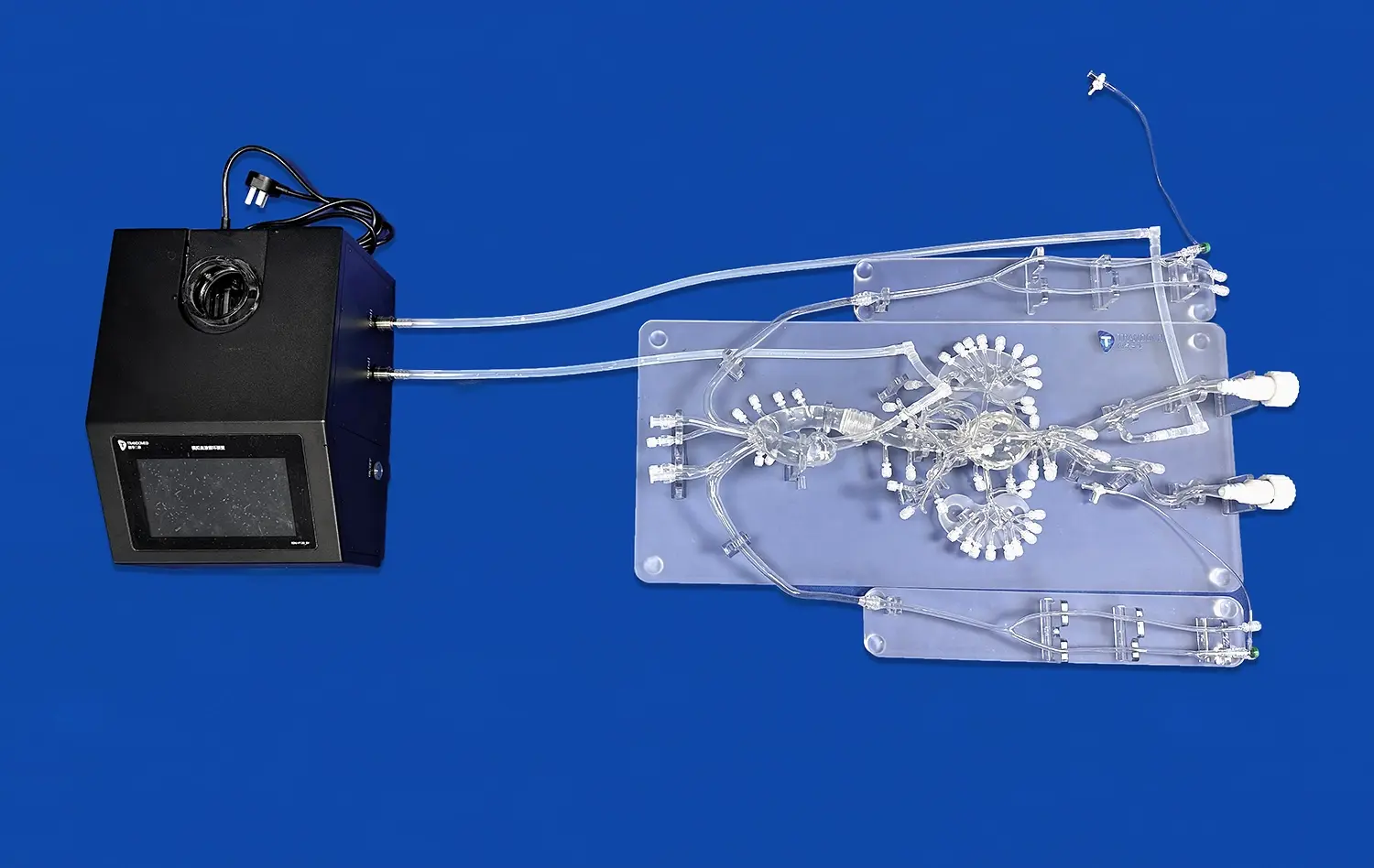
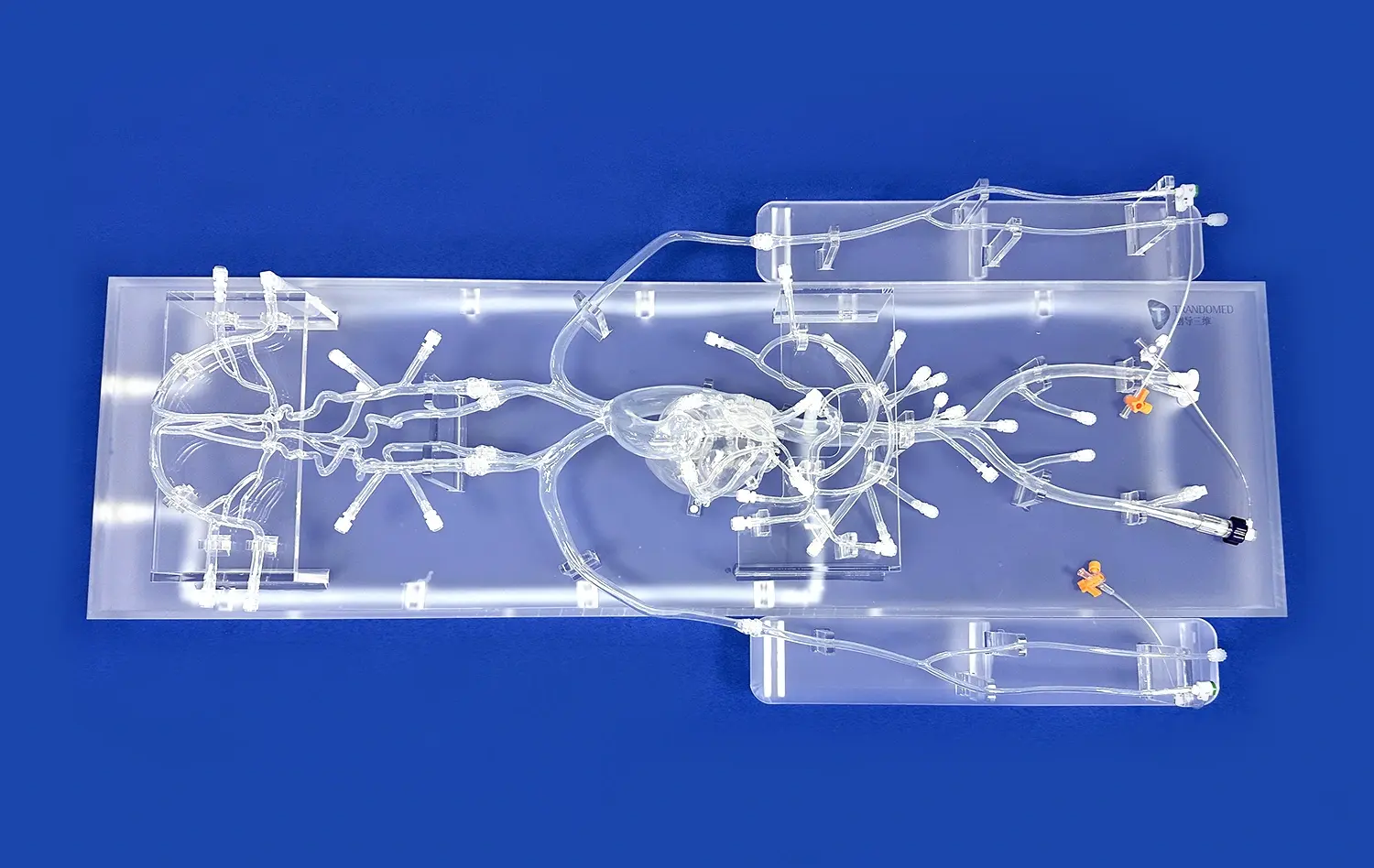
A big step forward in cardiovascular teaching technology is the development of detachable artery model devices. These advanced anatomy teaching tools properly show the shapes of heart arteries by using flexible, replaceable parts that make learning more effective. The models usually show a lot of anatomy, from the radial and femoral arteries to the aortic arch, left anterior descending artery, circumflex branch, and right coronary artery systems.
Advanced Material Engineering and Construction
Medical-grade silicone Shore 40A is the main material used to make high-quality cardiac exercise models. This special rubber gives the best physical feedback and lasts for a long time even when used for repeated training. The clear solid heart mounting system gives students a realistic sense of space and helps them understand how arterial veins and cardiac organs are connected in three dimensions. This choice of materials makes sure that it will last and keep the physical accuracy that is needed for professional medical training settings.
Educational Benefits and Learning Enhancement
These models are useful for teaching more than just studying anatomy the old-fashioned way. Students interact with real-life examples of heart problems like stenosis, hardening, bifurcation tumours, and chronic total occlusions. This hands-on method makes it much easier to understand complicated heart diseases and makes simulation-based surgery training easier. The flexible design allows a variety of cardiac courses, making vague links between body parts real and easy to understand for students of all skill levels.
Professional Applications and Training Scenarios
Healthcare facilities use these models to teach percutaneous cardiac intervention, test devices, and show how something works. Medical gadget companies use them to test their products, give marketing talks, and run professional training programs. For experiments and physical analysis, research schools use models that can be changed, and simulation centers use them as part of full cardiovascular training plans.
Comparing Customizable Detachable Models with Fixed Coronary Models
Medical institutions make decisions about what to buy by understanding the differences between customisable removable and standard fixed cardiac models, such as the detachable coronary model. These differences affect how well training works, how much it costs, and how useful it is in the long run.
Structural Design and Versatility Advantages
It is easier to use customisable removable models because they have parts that can be switched out and used to represent different disease conditions. Instead of set models with static physical images, removable systems let teachers change the layouts of vessels, swap sick parts, and show how cardiovascular conditions get worse over time. Because of this, schools can handle a wide range of teaching situations without having to buy a lot of different types.
The flexible design has arterial pieces that can be swapped out to represent common diseases found in different cardiac branches. Transparent joints make it easy to change parts, which lets teachers show how diseases develop or contrast healthy and diseased tissue. Complete replacement of either the left or right coronary artery gives you more ways to make it fit your specific training needs.
Cost-Effectiveness and Durability Considerations
Even though customisable models may cost more at first than set options, they are more valuable in the long run because they can be used in many different ways. Updating parts of a model makes it last longer and be more useful for learning without having to be completely replaced. Because one customisable system can replace multiple set models made for specific disease situations, procurement managers don't have to keep as much material on hand.
Durability tests show that high-quality silicone construction can survive heavy teaching use while still showing the anatomy correctly. The flexible design actually makes things last longer because worn-out parts can be replaced instead of whole model systems.
Training Effectiveness and Engagement Metrics
Educational study shows that models that can be changed make students more interested and help them remember what they've learned better than models that can't be changed. The dynamic nature of replacing parts makes it more like making real clinical decisions, which improves practical skill development. When training programs use customisable models, skill scores go up and the time it takes to learn complex cardiovascular procedures goes down.
How to Choose the Right Customizable Detachable Coronary Model for Your Needs?
To find the best cardiac exercise models, such as a detachable coronary model, you need to carefully consider the needs of the school, your training goals, and your budget. A lot of people have a say in this decision-making process, and technical factors that affect school results are taken into account.
Anatomical Accuracy and Fidelity Requirements
High-fidelity models must correctly show the sizes and shapes of the heart arteries, the ways they branch off, and any abnormalities that may be present. The factors for evaluation should include the accuracy of the physical landmarks, the precision of the vessel width, and the accurate feel of the material. Standard tube sizes and surgical devices used in clinical practice should be able to fit in the models. During repeated training sessions, the transparent heart placement system must allow for easy viewing while still keeping its structural integrity.
Customization Capabilities and Modular Options
Superior models are different from basic ones because they offer more customisation choices. Important features include stenosis segments that can be switched out and have different levels of severity, branching parts that can be switched out, and modular models of chronic total blockage. Focused customisation should be possible in high-priority arteries like the left anterior descending artery, the left circumflex artery, and the mid-segment right coronary artery.
Procurement teams should look at how easy it is to change parts and how readily available specialised diseased pieces are. During training, the connection system must allow for safe coupling while keeping physical accuracy.
Supplier Reliability and Support Services
Partnering with experienced makers guarantees consistent product quality and dependable customer service. When judging a company, you should look at their design advice services, pledges to customisation timelines, and technical support options. Suppliers who give free design services show that they care about their customers' success and lower the overall cost of the project.
For normal setups, manufacturing wait times are usually between 7 and 10 days. Custom orders may need more development time. Training programs don't get interrupted when there is clear information about release times and shipping choices.
Where and How to Purchase Customizable Detachable Coronary Models?
When buying medical training tools like a detachable coronary model, you can go through specialised makers, authorised resellers, or direct provider relationships. Knowing your buying choices and evaluation factors makes the buying process easier and makes sure you get a good product at a good price.
Manufacturer Selection and Evaluation Process
Leading companies, such as Ningbo Trando 3D Medical Technology Co., Ltd. (Trandomed), make blood computer models that are very accurate and can be changed in a lot of ways. Trandomed is China's first professional maker of medical 3D printing technology. They have over 20 years of experience in research and development that they use to make circulatory models. They have a wide range of products, such as 3D printed vascular models, high-end vascular simulators, and devices that simulate circulatory haemodynamics.
Procurement teams should look at a possible supplier's manufacturing skills, quality certifications, and customer references when they are deciding which one to work with. Manufacturers that have been around for a while usually offer full guarantees, expert support, and customisation services that make their products more valuable in the long run.
Ordering Process and Customization Workflow
Needs assessment and requirement definition are the first steps in the buying process. To make sure the best product setup, providers should be consulted in detail about anatomy accuracy needs, customisation choices, and training goals. The Detachable Coronary Model (XX004D) is a great example of advanced customisation because its parts can be switched out for different disease models.
As part of the standard buying process, technical specifications are looked over, suggestions for customisation are made, and a production schedule is set. Most of the time, T/T agreements are used for payment, and FedEx, DHL, EMS, UPS, and TNT services are available for shipping around the world. Institutional buyers get more value when manufacturers let them customise their products without charging extra for design costs.
Pricing Considerations and Budget Planning
When making an investment, you should think about how much the model will cost at first, how much customisation might be needed, and how it will help students in the long run. The exact price depends on how complicated the setup is and how much customisation is needed. However, the better training features make the investment worth it because they lead to better learning results and a lower need for many specialised models.
Institutions with multiple training sites or complete cardiovascular education programs may be able to save money by buying in bulk. When you work with a trusted source for a long time, you can often get better prices and faster customer service.
Future Trends and Innovations in Detachable Coronary Models
Digital tools, new materials, and creative ways of making things are all being used to make medical education technology, such as the detachable coronary model, better and better. These changes change how aerobic training is done and make simulations more useful.
3D Printing Technology Integration
Advanced 3D printing technologies make it possible to customise and accurately reproduce the anatomy of detachable coronary models in a way that has never been possible before. Anatomical data specific to a patient can be used to create personalised training situations that are based on real clinical cases. This feature is especially helpful for planning surgeries ahead of time and for medical training programs that need accurate models of the body.
Biocompatible material improvements give you more printing choices while keeping the physical qualities that are important for training. The freedom of 3D printing and the quality of standard manufacturing work together to make sure that models work the same way in all teaching situations.
Digital Technology Integration
Adding augmented reality and virtual reality to standard anatomy models turns them into learning tools that can be interacted with. These mixed systems use both physical models and digital images to make it easier to see how blood flow changes, take pressure readings, and get real-time advice on how to do procedures. This kind of collaboration is especially helpful for standardised skill testing methods and programs that let people learn from home.
The combination of smart sensors makes it possible to measure performance objectively during training sessions. This gives quantitative feedback on how well procedures are being followed and how skill development is progressing. This method is based on data, which helps medical education based on proof and efforts to keep getting better.
Market Evolution and Adoption Trends
As more healthcare organisations realise how important hands-on training is for better patient results, the global medical simulation market keeps growing. High-fidelity training tools are being used more and more in medical education classes because of the focus on competency-based education by regulators. As personalised medicine becomes more popular, there is a greater need for training models that can be changed to fit the needs of different patient groups and illnesses.
Conclusion
The advancement of cardiovascular education and practical training success requires the use of customisable detachable coronary model systems. The modular design of these high-tech modelling platforms gives them unmatched flexibility, letting schools meet a wide range of training needs with a single, flexible system. The mix of accurate anatomy, long-lasting materials, and the ability to be customised makes these models more useful for learning than standard set models. As medical education moves more toward competency-based training, these advanced modelling tools become even more important for getting doctors and nurses ready to give the best care to patients.
FAQ
What kinds of customisation choices are there for different heart problems?
Modern detachable coronary models can simulate a wide range of disease conditions, such as stenosis with different levels of severity, hardened vessel segments, bifurcation lesions, and chronic total blockage scenarios. Multiple disease states can be shown in a single model system thanks to interchangeable parts, and special connections make it easy to change the setup quickly during training classes.
What is the average lead time for an order for a customised model?
Lead times for standard model configurations are between 7 and 10 days, but if you need to make a lot of changes, the time may take longer depending on how complicated the design is. During the planning process, manufacturers usually give a lot of information about schedules to make sure that shipping fits with the needs of the training program.
How long do these types last when they are used a lot in schools?
Medical-grade silicone Shore 40A design makes sure that it will last a long time even after a lot of use. The modular design makes things last longer because it lets you change individual parts instead of whole model systems. Good makers back up long-term investments in schools with full guarantees and easy access to new parts.
Partner with Trandomed for Advanced Cardiovascular Training Solutions
Trandomed is a reliable company that makes detachable coronary models and offers cutting-edge modelling solutions that change the way medical education works. Because we've been using medical 3D printing technology for more than 20 years, we can guarantee physical correctness and customisation that can't be beat. We make the buying process easier for you and give you great value by offering free creation services, quick production times of 7-10 days, and shipping choices all over the world. Get in touch with our knowledgeable staff at jackson.chen@trandomed.com to talk about your unique training needs and find out how our customisable heart models can help your classes.
References
American Heart Association. "Guidelines for Cardiovascular Simulation-Based Training in Medical Education." Journal of Cardiovascular Education, vol. 15, no. 3, 2023, pp. 45-67.
International Society for Cardiovascular Training. "Effectiveness of Modular Anatomical Models in Interventional Cardiology Education." Medical Simulation Quarterly, vol. 8, no. 2, 2023, pp. 112-128.
Global Medical Education Research Consortium. "Comparative Analysis of Fixed versus Detachable Coronary Training Models." Healthcare Education Review, vol. 12, no. 4, 2023, pp. 203-219.
Society for Medical Simulation Technology. "Standards for High-Fidelity Cardiovascular Training Equipment." Simulation Technology Journal, vol. 7, no. 1, 2023, pp. 78-94.
European Association of Medical Device Testing. "Material Requirements and Safety Standards for Medical Training Simulators." Medical Device Safety Bulletin, vol. 18, no. 6, 2023, pp. 156-171.
World Health Organization Medical Education Division. "Impact of Simulation-Based Training on Cardiovascular Procedural Competency." Global Health Education Report, 2023, pp. 89-105.
_1736214519364.webp)
 (SJ001D)_1734504338727.webp)
1_1732869849284.webp)