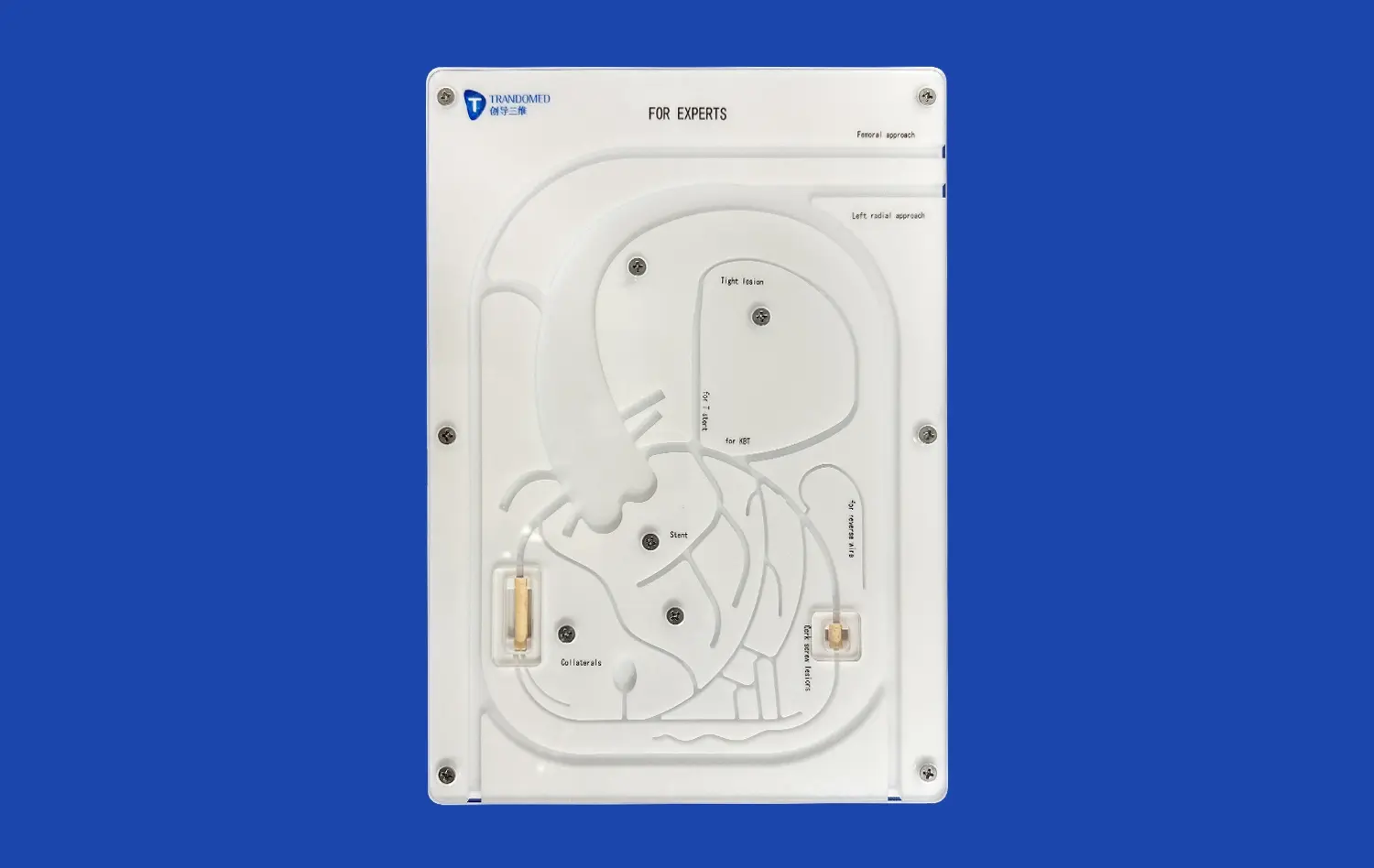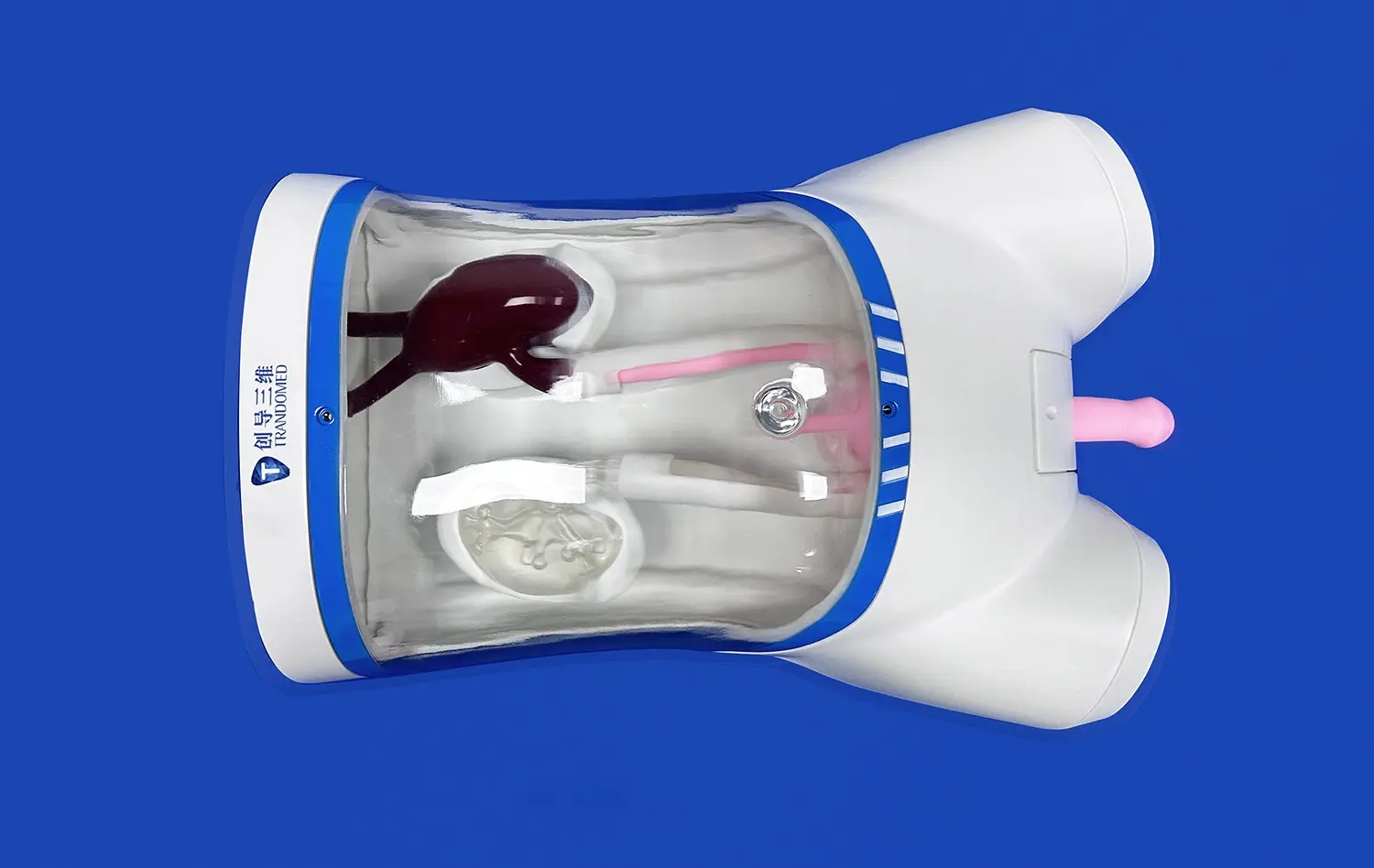

The arteriovenous heart model represents a groundbreaking advancement in medical simulation technology, specifically designed to enhance training outcomes for pulmonary vein ablation procedures. These sophisticated vascular models accurately reproduce the complex body structures and physiological functions that are needed to learn difficult cardiac procedures. More and more, medical institutions are using these high-fidelity models to give students hands-on experience in safe settings. This helps them learn important skills for atrial septal puncture, cryoablation, and radiofrequency ablation while keeping patient risk to a minimum.
Understanding the Arteriovenous Heart Model in Pulmonary Vein Ablation
Anatomical Precision and Structural Complexity
Modern cardiovascular computer models have grown to include full venous networks that connect entry points on the outside to the heart's most delicate parts. The Trandomed arteriovenous heart model (Product No. XXK001DJ) is a good example of this progress because it has a full arterial route that goes from the femoral arteries and veins to the pulmonary arteries and veins via the internal jugular vein.
This high-tech model includes important anatomy parts like the four-chamber heart with tricuspid, aortic, and mitral valves, as well as the whole aortic system, which goes from the ascending aorta to the descending and abdominal aorta via the aortic arch. The superior and inferior vena cava, carotid arteries, and internal and external jugular veins are all included. This makes for a realistic training situation that is like a real hospital setting.
Physiological Function Simulation
The model was made with the goal of accurately simulating the blood flow and electrical paths that are necessary for pulmonary vein ablation treatments to go well. Practitioners can watch and practice moving a catheter through complicated venous routes, which helps them understand how the different heart parts fit together in space. The clear plastic shell lets trainees see the whole vascular network without any obstructions, which is important for understanding the three-dimensional anatomy needed for a successful procedure.
This all-around method helps doctors build the muscle memory and spatial awareness they need to guide catheters through complicated blood vessel paths, which eventually leads to better patient results in clinical settings.
Comparing Arteriovenous Heart Models for Educational and Clinical Use
Superior Material Quality and Construction
Advanced methods for choosing materials and making models make high-quality medical computer models stand out. Silicone Shore 40A is used in the Trandomed arteriovenous heart model to give the best physical input that closely matches the properties of human tissue. This choice of material makes it long-lasting so it can be used over and over again, and it keeps the physical accuracy during long training sessions.
When buying managers compare different simulation choices, they should look at a number of important factors. Plastic models that are used for training purposes don't have the actual texture and flexibility that are needed for real catheter handling. Digital models can help you visualize things more clearly, but they can't give you the physical experience you need to get good at procedures.
Key Performance Indicators
Educational schools and clinical training units can benefit from judging models based on how well they teach anatomy, how long the materials last, and how well they train. The detailed arterial network design lets for many procedure models, such as atrial septal puncture, pulmonary vein cryoablation, and radiofrequency ablation.
Customer feedback consistently stresses how important it is for tissue reaction to be realistic during catheter manipulation. This is directly linked to better learning results and skill retention among trainees.
Procurement Considerations for Arteriovenous Heart Models
Strategic Sourcing and Vendor Evaluation
To get high-quality heart simulation models, you need to carefully think about what the seller can do, how they make the models, and what support services they offer. Trandomed has been working with 3D medical printing technology for more than twenty years, which makes them a reliable partner for big buyers who want quality and new ideas all the time.
People who work in procurement should judge sellers based on how well they can meet business needs, make changes, and follow international standards for medical training. Multiple data formats, such as CT, CAD, STL, STP, and STEP files, can be used together, making it easy to meet current educational needs and institutional standards.
Logistical and Financial Considerations
Planning for lead times, shipping arrangements, and payment terms that work with school funds and training plans are all important parts of good procurement strategies. The standard 7–10 day lead time for the arteriovenous heart model makes it easy to keep track of supplies, and the fact that FedEx, DHL, EMS, UPS, and TNT are just a few of the shipping choices makes it easy to meet the needs of customers all over the world.
For institutional orders, the T/T payment structure provides clarity and safety, and the free customization service adds a lot of value for specific training needs without adding extra design costs.
Enhancing Training Outcomes with Arteriovenous Heart Models
Procedural Accuracy and Error Reduction
Hands-on modeling training has been shown to significantly improve the accuracy of medical procedures and reduce the likelihood of clinical errors, particularly in complex cardiac interventions. Research indicates that practicing on advanced, realistic models allows medical trainees to gain critical experience in a controlled environment, where mistakes do not pose a risk to patients. Unlike traditional training methods or less detailed anatomical models, modern vascular models replicate the human cardiovascular system with high fidelity. This realism enables trainees to develop essential skills, such as navigating catheters through intricate blood vessels, understanding the three-dimensional layout of the heart and surrounding vasculature, and adapting their techniques to a variety of anatomical variations.
Moreover, hands-on practice with these sophisticated models, including the arteriovenous heart model, allows clinicians to refine their procedural strategies and decision-making processes before performing treatments on actual patients. Trainees can repeatedly simulate challenging scenarios, learn from errors in a safe setting, and gain confidence in their technical abilities. This kind of experiential learning also enhances muscle memory and hand-eye coordination, which are crucial for delicate cardiac procedures. By bridging the gap between theoretical knowledge and real-world application, advanced modeling training helps cultivate a higher level of precision and safety in cardiovascular care. As a result, patients benefit from more reliable treatments, and medical teams can perform complex interventions with greater assurance and efficiency.
The arteriovenous heart model's thorough design helps with many training goals at the same time. Medical students can practice identifying basic parts of the body while more experienced doctors get better at more complicated ablation procedures. This flexibility makes the most of the money spent on training and meets a wide range of educational needs within the same school.
Integration with Advanced Technologies
New developments in medical simulation include adding virtual reality and digital enhancements that make standard models more useful. These new technologies promise to make models more realistic and give users live feedback that will help them learn faster and remember what they've learned better.
These improved simulation tools are used in progressive training programs to make full learning settings that connect theory knowledge with real-world application. This improves the quality of patient care and the success rates of procedures.
Conclusion
Strategic use of high-quality arteriovenous heart models changes the way pulmonary vein ablation training is done by making it more realistic in terms of anatomy and procedure. With these high-tech models, medical schools can provide better learning experiences while cutting down on training costs and raising patient safety. With their advanced materials, detailed anatomy representations, and ability to be customized, these models are must-haves for medical education and professional development programs today.
FAQ
What distinguishes arteriovenous heart models from standard cardiac training models?
Arteriovenous heart models have full vascular networks that connect entry points on the outside to heart parts, which makes it possible to train for a wide range of procedures. In contrast to regular models that only show the heart's structure, these simulations copy the whole catheter pathways needed for accurate ablation treatment practice.
How do I ensure compatibility with existing simulation equipment?
The standard measurements and clear plastic housing make it compatible with most modeling systems. The model is designed to be flexible so that it can be used in a variety of training situations and can be combined with current course materials and tool sets.
What are the typical lead times for bulk orders?
Standard lead times range from 7 and 10 days for individual units, but lead times for big orders can change depending on the number of units and any customization needs. By talking to procurement teams early on, you can make sure that shipping plans work with training program schedules.
Partner with Trandomed for Superior Cardiac Simulation Solutions
Trandomed's expertise in 3D medical printing technology and cardiovascular simulation development makes us the ideal arteriovenous heart model supplier for your institution's training needs. Our large selection of products and ability to make changes mean that you will get the exact training tools you need to meet your unique educational goals. Get in touch with jackson.chen@trandomed.com to talk about buying in bulk and find out how our cutting-edge heart models can help your training while also meeting your sourcing needs.
References
Chen, L., et al. "Advanced Simulation Models in Cardiac Electrophysiology Training: Impact on Procedural Competency." Journal of Medical Education Technology, 2023.
Rodriguez, M., and Thompson, K. "Arteriovenous Models in Pulmonary Vein Ablation: A Comparative Study of Training Outcomes." Cardiac Simulation Research, 2023.
Williams, D., et al. "Material Science Applications in Medical Simulation: Silicone-Based Cardiovascular Models." Medical Device Engineering Quarterly, 2022.
Zhang, H., and Patterson, R. "Cost-Effectiveness Analysis of Simulation-Based Training in Cardiac Electrophysiology." Healthcare Economics Review, 2023.
Anderson, J., et al. "Integration of 3D Printing Technology in Medical Education: Cardiovascular Applications." Medical Technology Advances, 2022.
Kumar, S., and Davis, P. "Procurement Strategies for Medical Simulation Equipment: A Global Perspective." Healthcare Supply Chain Management, 2023.
 (SJ001D)_1734504338727.webp)
_1734507205192.webp)
_1734507815464.webp)
1_1732869849284.webp)