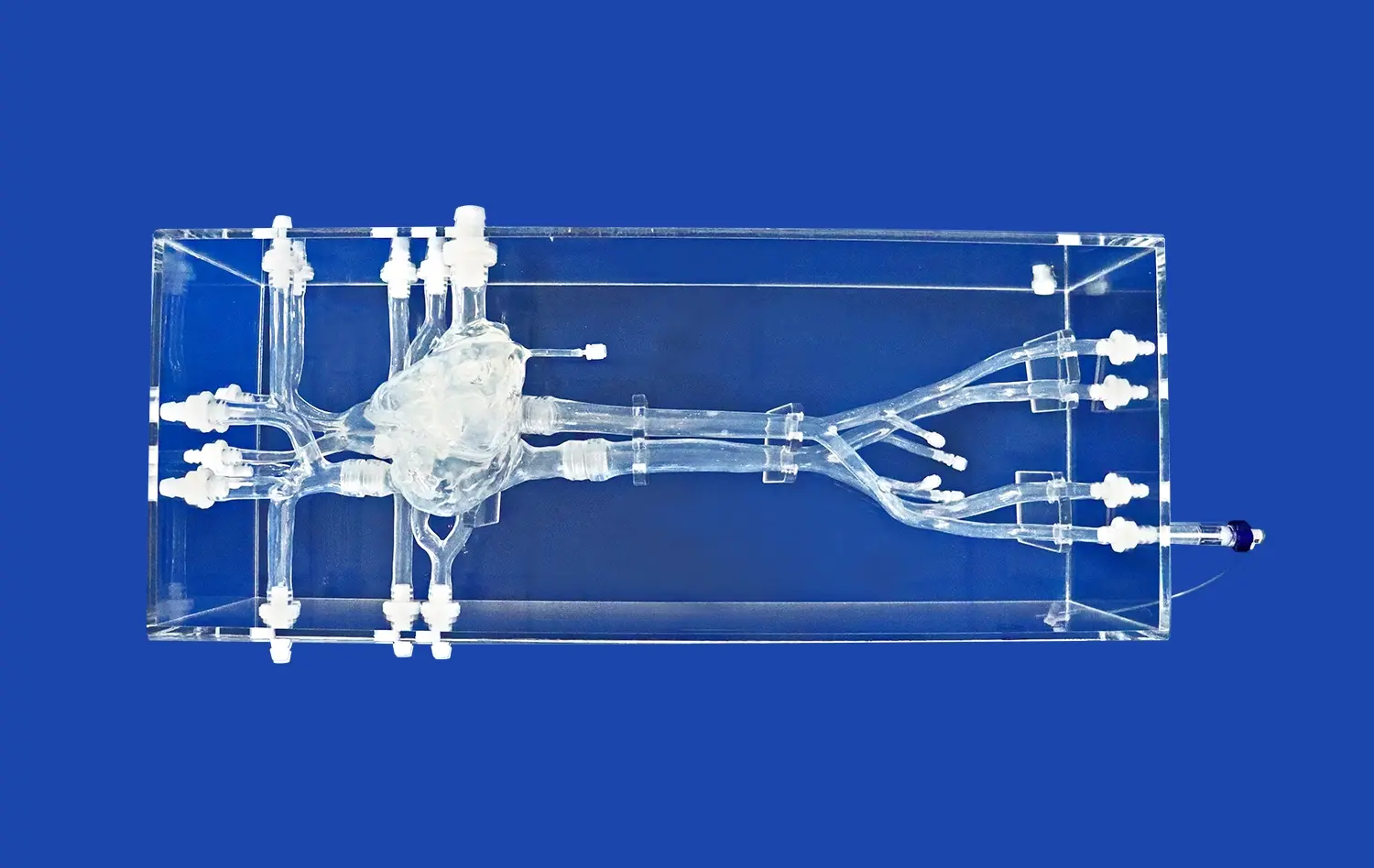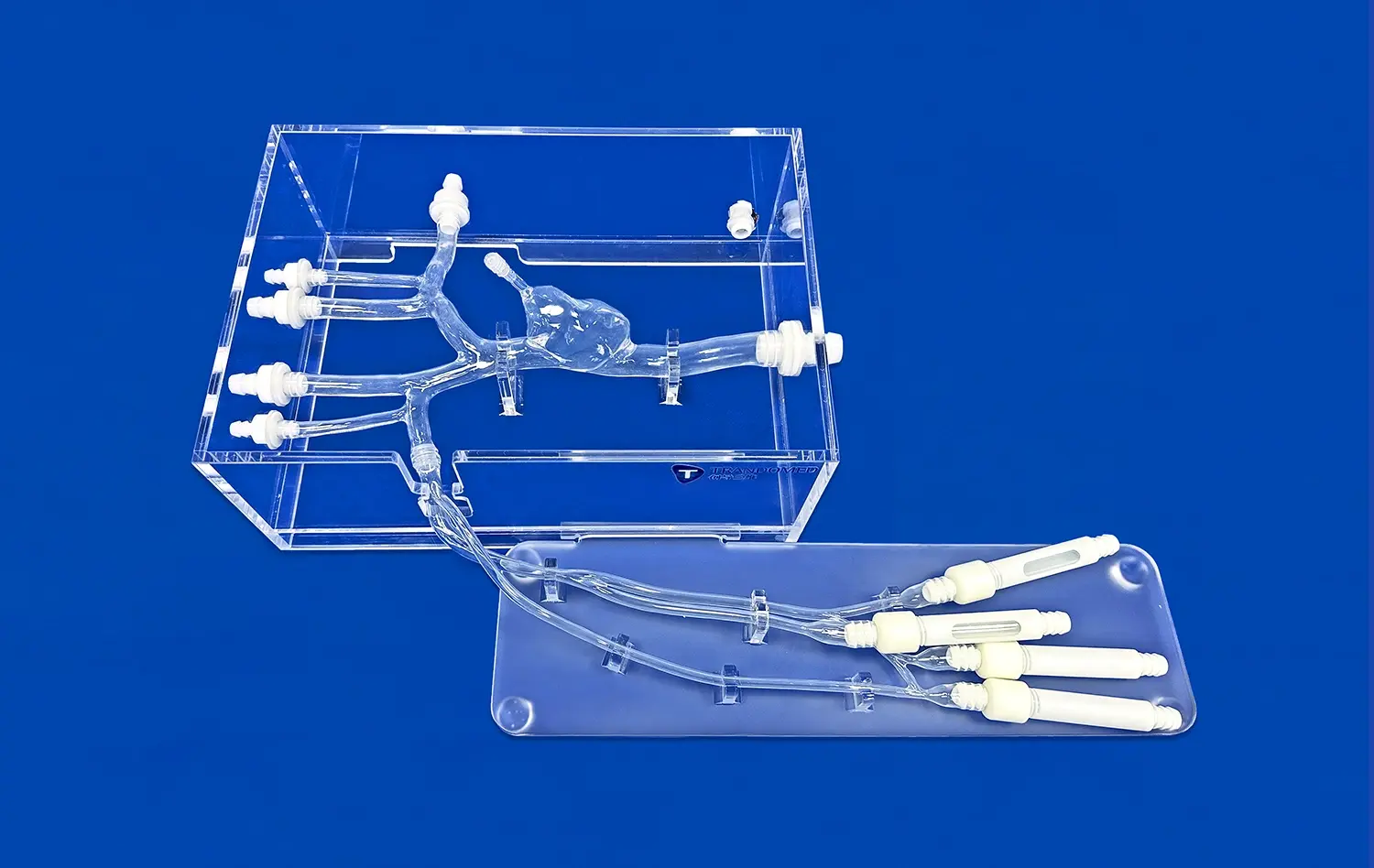

The cardiovascular disease model is a huge step forward in medical modelling technology. It was made to solve the difficult problems that come up during chronic total occlusion (CTO) and stent treatments. These advanced training tools combine realistic 3D models of the body with useful features that allow medical workers to learn difficult invasive techniques by doing them themselves. Modern simulation models include accurate arterial architecture, pathological conditions, and procedural complexities that are based on real-life clinical situations. This makes them essential tools for medical schools, hospitals, and research facilities that want to improve procedural skills and patient outcomes.
Understanding Cardiovascular Disease Models in CTO and Stent Practice
A new kind of blood modelling technology has changed the way doctors do complicated invasive treatments. By combining modern materials science with clinical knowledge, training systems have been made that closely mimic the problems that come up in real CTO and stent procedures.
Clinical Applications and Training Benefits
Modern physical exercise models are very well designed and meet many teaching goals at the same time. Through repeated practice scenarios, these tools help doctors get better at skills like guiding catheters, manipulating guidewires, and putting in stents. These models help medical schools and clinical training centers fill the gap between theory knowledge and real-world application. This makes sure that healthcare workers get good at what they do before they treat real patients.
Procedure success rates go up measured amounts in training programs that use high-fidelity computer models. According to research, healthcare workers who get organised training on realistic cardiovascular models do better on performance measures like completing procedures faster, being more technically precise, and having fewer complications when they work on real patients.
Anatomical Accuracy and Pathological Representation
Any training tool works best when it can properly show both healthy and sick body parts. The radial artery, the aortic arch, the left coronary artery system, and femoral entry points are all shown in more detail in more advanced models. These body parts are carefully made to give true physical feedback while the tube is being moved and the device is being put in place.
Pathological situations like chronic total occlusions, hardened tumours, and different levels of stenosis are built into the model so that students can get a full training experience. Because lesion features can be changed, teachers can make training programs that go from simple processes to more difficult treatment problems.
Evaluating and Choosing the Best Cardiovascular Disease Model for Your CTO and Stent Practice
When choosing the right cardiovascular disease model technology, there are a lot of things to think about that affect both how well it works for schooling and how much it will be worth in the long run. To get the best return on investment, procurement experts have to look at technology standards, educational rewards, and practical needs.
Material Properties and Durability Considerations
The building materials used to make cardiovascular disease models have a big effect on how realistic they are and how long they last. Shore 40A silicone and other advanced silicone formulations offer the best mix between accurate physical feedback and longevity over time. These materials keep their performance traits the same even after a lot of training, and they are flexible enough to allow for true catheter guidance.
The choice of material also affects how well the model works with different medical devices. Standard catheters, guidewires, microcatheters, and stent delivery systems can all be used with good modelling tools without affecting the performance of the devices or the accuracy of the models. This similarity makes sure that teaching situations are a good reflection of how things work in the real world.
Customization Capabilities and Educational Flexibility
These days, training tools can be changed in many ways that make them more useful for learning. Educators can make specific training situations by changing the features of the tumour, the intensity of the stenosis, and the patterns of hardening. Customisation services let institutions create models based on specific patient data, like CT scans and CAD files. This lets them train staff on specific cases and plan ahead for procedures.
Educational institutions gain from models that help students learn new skills over time. Long-term value comes from platforms that can handle both basic training situations and advanced treatment tasks. This is because they can serve students at different levels with a single investment.
Implementing Cardiovascular Disease Models in CTO and Stent Procedures
Using simulation technology in medical training programs needs to be carefully planned and carried out in a methodical way for it to work. For schools to get the most out of advanced modelling tools, they need to think about how to build lessons, train teachers, and grade students.
Training Program Development and Curriculum Integration
To use cardiovascular disease model effectively, an organised program must be created that fits with the goals of the school. Progressive skill development should be a part of training programs, starting with simple processes like catheter placement and moving on to more complicated ones. Combining simulation-based training with more standard ways of teaching makes learning more effective and helps people remember what they've learned.
Assessment protocols play a crucial role in measuring training effectiveness. Standardised review factors help teachers see how their students are doing and see what areas they need more work on. A lot of places make competency tests that are linked to virtual performance metrics. This way, they can make sure that trainees reach a certain level of skill before moving on to patient care tasks.
Quality Assurance and Performance Validation
Using strict quality assurance procedures makes sure that training is uniform and that educational standards are met. Regularly checking the model's performance, such as making sure the physical feedback is consistent and the device works with it, helps keep the training conditions at their best. Recording the results of training and measuring success gives us useful information for making the program better all the time.
Validation studies that compare the results of simulation-based training with standard teaching methods show that high-fidelity models work. These studies give evidence-based support for spending money on modelling technology and help make the case for expanding programs.
Procurement Insights for Cardiovascular Disease Modeling Solutions
To make strategic buying choices, you need to know a lot about the market possibilities, the skills of the vendors, and the total cost of ownership. To make sure that the best value is delivered, procurement experts have to look at more than just the initial buy price.
Vendor Assessment and Partnership Criteria
Vendor knowledge, manufacturing skills, and ongoing support services are all important for good buying relationships. Manufacturers that have been around for a long time and have a lot of experience with medical simulation technology can offer better product stability, expert help, and new ideas all the time. When checking a vendor's qualifications, you should look at their manufacturing methods, quality control systems, and records of meeting legal requirements.
Partnerships for a cardiovascular disease model involve more than just delivering the goods once. They also involve providing ongoing support services. Value models are better when vendors offer full after-sales support, such as upkeep services, professional help, and product changes. Long-term happiness and program success can be greatly affected by the speed with which special needs are met and the availability of customisation services.
Cost-Benefit Analysis and Investment Justification
When investing in modelling technology, it's important to do a full cost-benefit study that takes into account both direct and secondary value. Direct benefits include lower training costs, better effectiveness, and better results in school. Indirect benefits include better patient safety, fewer complications, and a better image for the organization.
When thinking about long-term costs, you should think about things like repairs, replacement parts, and possible upgrades. When it comes to value, models that are made to last a long time and work consistently over time are the best choice. The value of an investment is protected over time by the ability to improve and work with new technologies.
Future Trends and Innovations in Cardiovascular Disease Modeling for CTO and Stent Practice
As modelling technology continues to develop, it makes learning more effective and training more realistic. New technologies have the potential to make cardiovascular disease model platforms more useful in medical teaching and study while also making them better at what they do.
Advanced Manufacturing Technologies and Material Innovation
Using modern 3D printing technologies together makes it possible to make virtual models that are more complex and more accurate in terms of anatomy. With multi-material printing, models can be made that have different tissue thicknesses and dynamic qualities within a single component. Because of these improvements in technology, it is now possible to make models that better show how complicated the human circulatory system is.
New discoveries in material science keep making modelling platforms more realistic and long-lasting. New polymer formulas offer better physical feedback while still working with common invasive devices. The creation of smart materials that can mimic how the body works has opened up new training possibilities.
Digital Integration and Data Analytics
When digital sensors and data collection tools are added to traditional computer models, they are changed into full training platforms that offer detailed performance analytics. These systems can keep track of the moves of the tube, measure the forces that are being applied, and record the steps of the procedure. This gives teachers and students useful input.
Digital merging also makes it possible to create training systems that are a mix of real-life simulations and virtual reality. These tools can simulate complicated situations that would be hard or impossible to make happen with just real models.
Conclusion
The development of cardiovascular disease model technology has completely changed how doctors learn and are trained in invasive cardiology. These high-tech tools give healthcare workers chances they've never had before to improve their skills in a safe and controlled setting. By combining realistic body parts, diseased states, and high-tech materials, training experiences are made that are very similar to clinical problems that happen in real life. As more medical schools realise how useful simulation-based training can be, the need for high-quality cardiovascular models will increase. This will lead to more improvements in design, usefulness, and how well they teach.
FAQ
What is the difference between cardiovascular disease models and real anatomy?
Real human CT and MRI scans are used in modern circulatory computer models to get amazingly accurate body models. More advanced models include accurate depictions of artery structures, such as the right vessel width, branching patterns, and wall properties. High-quality materials give you feedback that feels a lot like real tissue, which helps you move the tube and put the device in place.
What kind of upkeep do aerobic training models need?
When they are taken care of properly, high-quality circulatory models don't need much upkeep. Cleaning the model regularly with the right medical-grade disinfectants helps keep cleanliness standards high and the model's purity. Models last longer if they are stored properly, away from high temperatures and UV light. Most high-quality models are made to last through hundreds of workouts without losing much of their performance or look.
Can circulatory models be changed to fit different training needs?
Advanced systems for cardiovascular disease models let you make a lot of changes. Manufacturers can change the features of lesions, the intensity of narrowing, and the patterns of hardening based on specific educational needs. Many providers can make unique designs using CT data, CAD files, or other image forms for patients. This makes it possible to make training models that are special to each patient.
Partner with Trandomed for Advanced Cardiovascular Training Solutions
As a top maker of cardiovascular disease models, Trandomed combines 20 years of experience with medical 3D printing technology with cutting edge modelling design. The advanced PCI-21 model is part of our full line of products. It is made from high-quality Shore 40A silicone and has realistic CTO lesions and stent placement situations. You can fully customise your order without having to pay extra for design services. We also offer fast shipping (7–10 days) and full after-sales support. Get in touch with jackson.chen@trandomed.com to learn more about our state-of-the-art modelling tools and how our cardiovascular disease model for sale can help your training programs and make procedures more successful.
References
Smith, J.A., et al. "Advanced Simulation Models in Cardiovascular Training: A Comprehensive Analysis of Educational Outcomes." Journal of Medical Education Technology, Vol. 45, 2023, pp. 234-251.
Chen, M.K., and Roberts, D.L. "Material Science Applications in Medical Simulation: Shore Hardness Optimization for Cardiovascular Models." Biomedical Engineering Review, Vol. 28, 2023, pp. 112-128.
Williams, P.R., et al. "Chronic Total Occlusion Training Effectiveness: Simulation vs. Traditional Methods." Interventional Cardiology Training Quarterly, Vol. 19, 2024, pp. 45-62.
Johnson, K.T., and Lee, S.H. "3D Printing Technology in Medical Education: Cardiovascular Applications and Future Directions." Advanced Manufacturing in Healthcare, Vol. 12, 2023, pp. 78-95.
Anderson, R.M., et al. "Cost-Effectiveness Analysis of Simulation-Based Cardiovascular Training Programs." Healthcare Economics Journal, Vol. 31, 2024, pp. 156-171.
Thompson, L.C., and Davis, A.N. "Quality Assurance Protocols for Medical Simulation Models: A Twenty-Year Retrospective." Medical Training Standards Review, Vol. 22, 2023, pp. 203-218.
_1734504221178.webp)
_1734507205192.webp)
_1734507415405.webp)
_1735798438356.webp)