

What Research Applications Benefit from Accurate Stomach Models?
Studying Gastric Motility and Digestion
Accurate stomach models provide researchers with invaluable tools for investigating the intricacies of gastric motility and digestion. These lifelike replicas allow scientists to observe and analyze the complex movements and contractions of the stomach during various stages of the digestive process. By incorporating sensors and imaging technologies into these models, researchers can gather detailed data on factors such as peristalsis, gastric emptying rates, and the mixing of gastric contents. This level of insight helps in understanding conditions like gastroparesis, functional dyspepsia, and other motility disorders, potentially leading to more effective treatments.
Investigating Gastric Acid Secretion and pH Regulation
The stomach's role in maintaining proper pH levels and secreting gastric acid is crucial for digestion and protection against pathogens. Anatomically correct stomach models enable researchers to study these processes in detail. By simulating the stomach's internal environment, scientists can examine how different factors affect acid production, mucus secretion, and the overall pH balance within the gastric lumen. This research is particularly valuable for developing new treatments for conditions such as gastroesophageal reflux disease (GERD), peptic ulcers, and Zollinger-Ellison syndrome.
Exploring Gastric Absorption and Drug Delivery
Accurate stomach models serve as excellent platforms for investigating gastric absorption mechanisms and optimizing drug delivery systems. Researchers can use these models to study how various medications and nutrients are absorbed through the stomach lining, helping to improve the efficacy of oral medications. Additionally, these simulations allow for the development and testing of novel drug delivery methods, such as gastro-retentive systems or targeted release formulations, which can enhance the therapeutic effects of medications while minimizing side effects.
Testing Medical Devices and Techniques in a Controlled Environment
Evaluating Endoscopic Procedures and Instruments
Anatomically correct stomach models provide an ideal platform for testing and refining endoscopic procedures and instruments. These realistic simulations allow researchers and medical device manufacturers to assess the performance of new endoscopic tools in a controlled setting. By replicating the stomach's internal geometry and texture, these models enable the evaluation of factors such as maneuverability, visibility, and tissue interaction. This controlled testing environment facilitates the development of more efficient and less invasive endoscopic techniques, ultimately leading to improved patient outcomes and reduced procedural risks.
Developing and Validating Surgical Techniques
Accurate stomach models play a crucial role in the development and validation of new surgical techniques. Surgeons and researchers can use these replicas to practice and refine complex procedures, such as minimally invasive gastric surgeries or bariatric interventions. The ability to simulate various anatomical variations and pathological conditions allows for comprehensive training and assessment of surgical skills. Moreover, these models serve as valuable tools for comparing different surgical approaches, optimizing instrument design, and establishing standardized protocols for novel procedures.
Simulating Pathological Conditions for Research
One of the most significant advantages of using anatomically correct stomach models in medical research is the ability to simulate various pathological conditions. Researchers can modify these models to replicate specific diseases or abnormalities, such as gastric ulcers, tumors, or congenital malformations. This capability allows for in-depth study of disease progression, treatment efficacy, and potential complications without the need for human subjects. By providing a consistent and reproducible platform for experimentation, these models accelerate the development of new diagnostic and therapeutic strategies for a wide range of gastric disorders.
How 3D Models Contribute to Innovation in Gastroenterology?
Advancing Personalized Medicine Approaches
The use of 3D-printed stomach models is revolutionizing personalized medicine in gastroenterology. By creating patient-specific models based on individual CT or MRI scans, researchers and clinicians can tailor treatments to each patient's unique anatomy. This approach is particularly valuable in complex cases, such as planning interventions for patients with anatomical variations or extensive scar tissue from previous surgeries. Personalized stomach models enable surgeons to rehearse procedures, anticipate potential challenges, and develop customized treatment strategies, ultimately leading to improved surgical outcomes and patient satisfaction.
Enhancing Medical Education and Training
Anatomically correct stomach models serve as powerful educational tools for medical students, residents, and practicing gastroenterologists. These tangible, three-dimensional representations provide a more intuitive understanding of gastric anatomy and physiology compared to traditional textbooks or 2D images. Trainees can use these models to practice various diagnostic and therapeutic techniques, such as endoscopy or laparoscopic surgery, in a risk-free environment. The ability to repeatedly practice on realistic models accelerates the learning curve and helps build confidence in performing complex procedures, ultimately translating to better patient care.
Facilitating Interdisciplinary Collaboration
The development and utilization of accurate stomach models foster collaboration between various disciplines within gastroenterology and beyond. These models serve as a common platform for surgeons, gastroenterologists, radiologists, biomedical engineers, and material scientists to work together on innovative research projects. This interdisciplinary approach leads to the cross-pollination of ideas and expertise, driving advancements in areas such as biomaterials, tissue engineering, and medical imaging. By bridging the gap between clinical practice and cutting-edge technology, 3D stomach models catalyze breakthroughs in diagnostics, therapeutics, and surgical interventions for gastric disorders.
Conclusion
Anatomically correct stomach models have emerged as indispensable tools in medical research, offering unprecedented opportunities for advancing our understanding of gastric physiology and pathology. These high-fidelity replicas enable researchers to conduct innovative experiments, develop novel surgical techniques, and test new medical devices in a controlled environment. By facilitating personalized medicine approaches, enhancing medical education, and fostering interdisciplinary collaboration, these models are driving innovation in gastroenterology. As technology continues to evolve, the role of accurate stomach models in medical research will only grow, paving the way for groundbreaking discoveries and improved patient care in the field of gastroenterology.
Contact Us
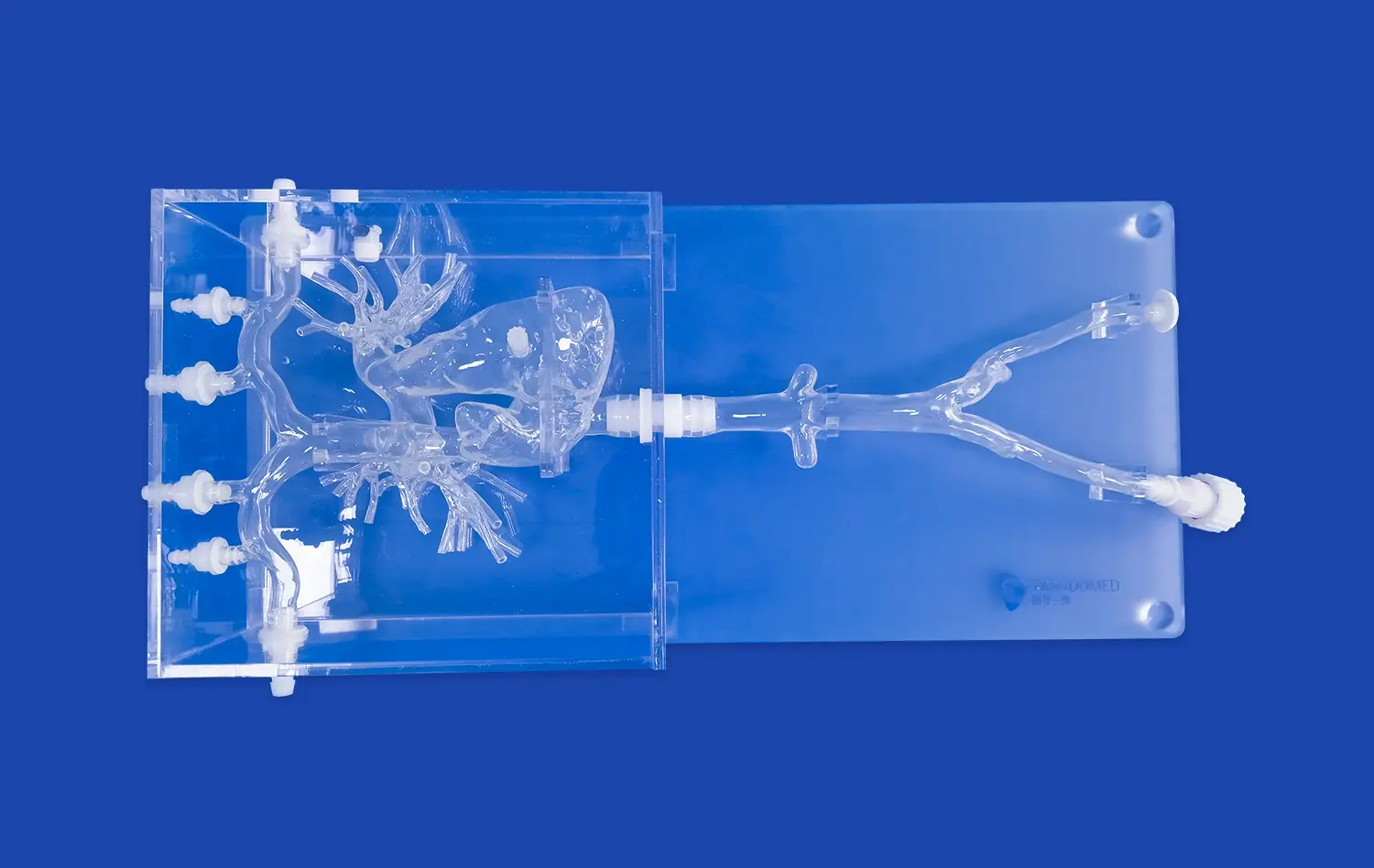
At Trandomed, we're at the forefront of creating cutting-edge, anatomically correct stomach models for medical research and education. Our advanced 3D printing technology and expertise in medical simulation allow us to produce highly accurate, customizable models that meet the diverse needs of researchers, educators, and healthcare professionals. As a leading manufacturer and supplier of medical simulation products, we're committed to driving innovation in gastroenterology and supporting the advancement of medical science. To learn more about our stomach models and how they can benefit your research or educational programs, please contact us at jackson.chen@trandomed.com. Let Trandomed be your partner in pushing the boundaries of gastroenterological research and education.
_1735798438356.webp)