
Vertebral Artery Model for Endovascular and Microsurgical Practice
2026-02-20 09:00:04
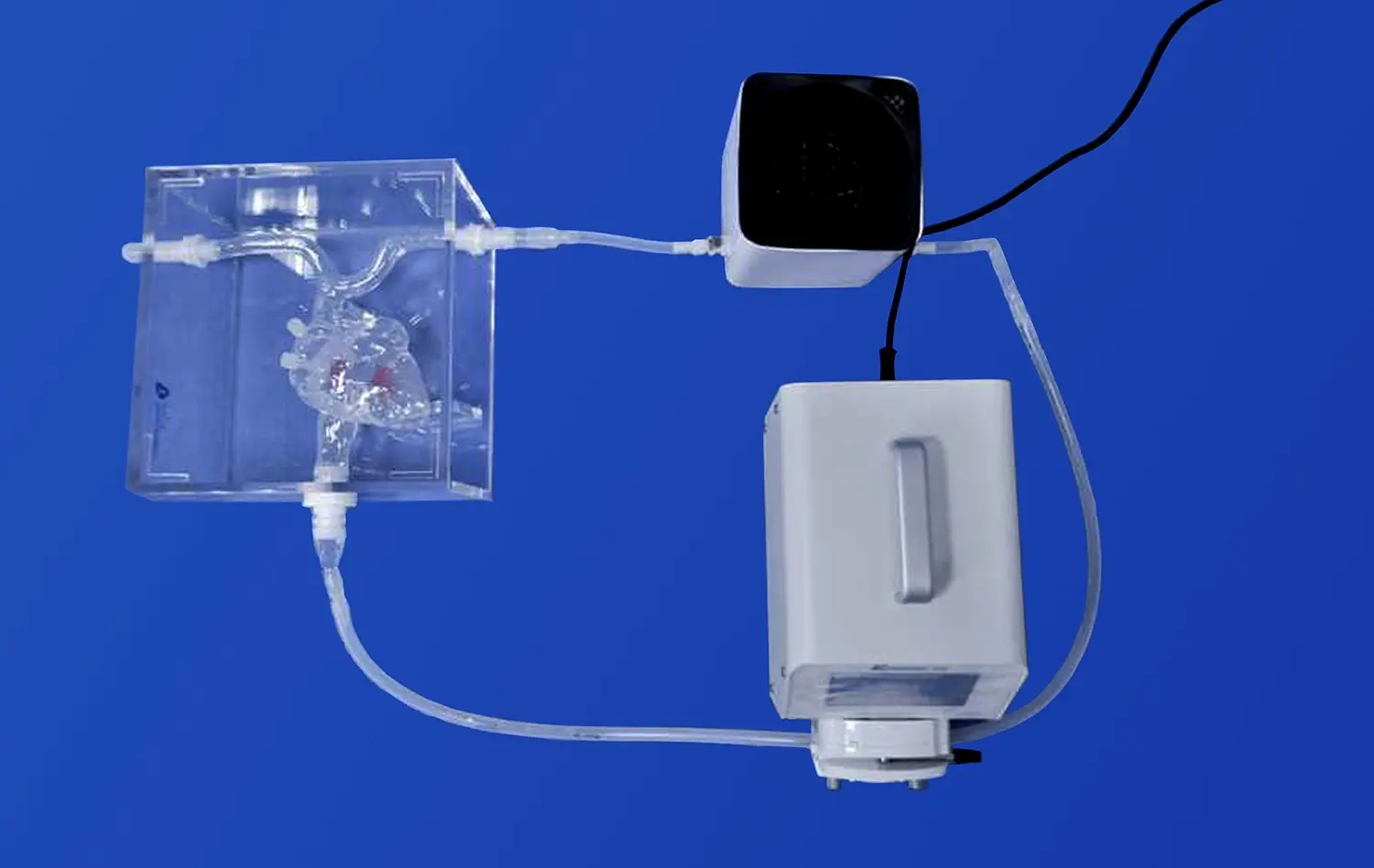
For doctors who want to learn how to do complicated neurovascular procedures, the vertebral artery model is a novel teaching tool. These complex anatomical replicas make realistic training settings for learning endovascular procedures and microsurgical methods on the vertebrobasilar circulation. More advanced models show the vertebral artery, the basilar artery, and other blood vessels in great detail. This helps students learn all the skills they need to treat difficult situations like basilar artery tumors. These high-fidelity models are being used more and more in modern medical education to bridge the gap between academic knowledge and hands-on experience.
Understanding Vertebral Artery Models: Anatomy, Function, and Educational Value
The use of physically correct simulation models has made a big difference in medical education. The way doctors learn and do complicated neurovascular procedures has changed because of these teaching tools.
Anatomical Accuracy and Structural Components
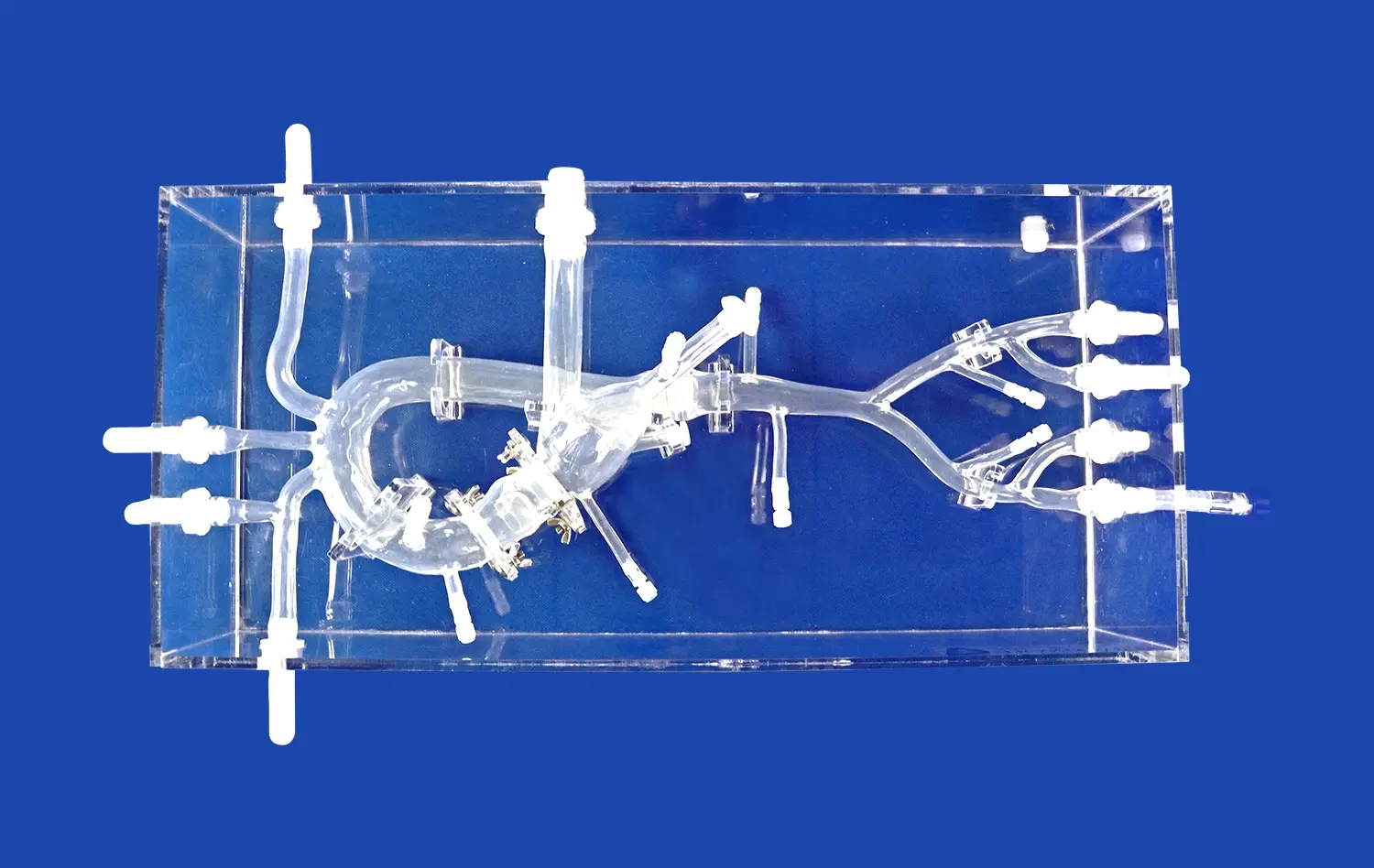
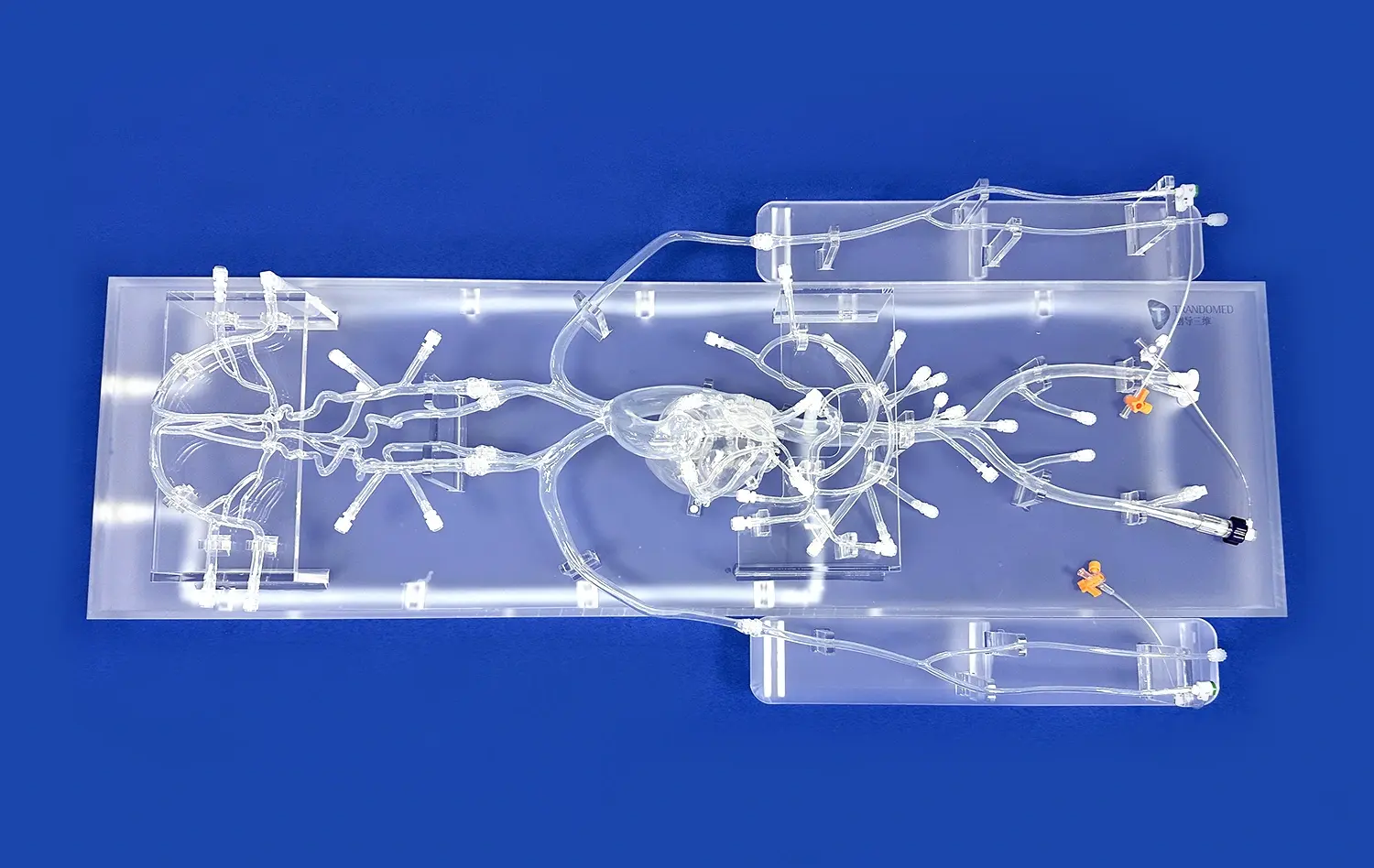
One of the most complicated networks of blood vessels in the body is the spinal artery system. Professional training models have to find the perfect mix between being accurate in their anatomy and being useful in real life. The vertebral artery, basilar artery, and posterior cerebral artery up to the P1 section are all carefully copied in the Trandomed SJK009D model. This full-color model includes accurate aneurysm tumors on the basilar artery, giving students real-life examples of diseases.
The vertebrobasilar system is responsible for about 20% of the blood flow to the brain, so it is very important that medical students understand how it works. These models show the four separate parts of vertebral arteries: the preforaminal part, which comes from the subclavian arteries, the foraminal part, which goes through the cervical vertebrae, the extraosseous part, and the cranium part. Medical workers who work with posterior circulation treatments need to understand these differences in anatomy.
Educational Benefits and Learning Enhancement
In today's medical school, students need hands-on training that can't be gotten from reading textbooks. High-fidelity computer models help close this gap in education by letting students learn through touch. Students can learn about the links between parts of the body, figure out where things are in space, and build muscle memory for delicate processes. The advanced versions are made of silicone Shore 40A, which gives them a lifelike tissue feel that makes training more fun.
Research shows that training based on simulations greatly boosts confidence in procedures and shortens the time it takes to learn them. Medical students and residents who learn with anatomically correct models are better able to understand space and do better in real clinical procedures. The best way to learn is to be able to practice complicated moves over and over again without putting the patient at risk.
Choosing the Right Vertebral Artery Model for Endovascular and Microsurgical Training
There are a lot of things that affect educational results and long-term value that need to be carefully thought through when choosing the right training tools.
Material Properties and Durability Considerations
The choice of materials has a direct effect on how well training works and how long models last. When they are manipulated, silicone-based models feel more like real arterial tissue because they are more sensitive. Shore hardness values between 30A and 50A are the best range for balancing longevity and realism. Shore 40A silicone is used to make the Trandomed vertebral artery model, which gives uniform results across multiple training sessions.
Durability is especially important for school buying where models are used by many trainees on a regular basis. Quality materials keep their shape even after being cleaned, manipulated, and used to place catheters and guidewires many times. Ultimately, investing in sturdy models gives better value because they last longer and provide regular training experiences.
Customization Options and Adaptability
Modern training programs need to be adaptable so they can meet a wide range of educational goals and medical situations. Institutions can change models to fit their specific needs with the help of full customization services. Being able to change the number, size, and location of aneurysms lets doctors prepare specifically for certain clinical situations.
Modern makers can work with a variety of data formats, such as CAD, STL, STP, and STEP files, which makes it easy to connect to current learning materials. Because of this, custom models are sure to perfectly match the needs of the program and special learning goals. Customization that doesn't cost extra on the design side is a great benefit for schools that are trying to stick to a budget.
Procurement Guide: How to Buy Vertebral Artery Models for Professional Use
When you do strategic buying, you need to know what your suppliers can do, when they can do it, and what support services they offer to make sure the implementation goes smoothly.
Supplier Evaluation and Selection Criteria
When professional buying teams choose training model providers, they have to look at a number of things. Fundamental evaluation factors include manufacturing knowledge, quality control methods, and the ability to customize. Established producers with a lot of experience in medical simulation show that they have a better understanding of the standards for clinical accuracy and training needs.
Trandomed has been a leader in the creation of body models for 20 years thanks to their focus on medical 3D printing technology innovation. Their wide range of products, which includes vascular models, endoscope training simulators, and cardiovascular hemodynamics modeling devices, shows how knowledgeable they are in many areas. This knowledge leads to better products and more efficient customer service.
Logistics and Delivery Considerations
For buying methods to work well, delivery dates must be solid and there must be a lot of shipping choices. Professional sellers keep their production processes simplified so that orders can be filled quickly. The 7–10 day lead time that well-known makers offer makes sure that training plans and curriculum planning aren't thrown off too much.
International purchasing is made easier by the fact that known companies like FedEx, DHL, EMS, UPS, and TNT offer global shipping. Reliable shipping partnerships make sure that products get delivered safely and that delays that could affect school programs are kept to a minimum. Professional methods for packing and handling protect fragile anatomy models while they are being shipped.
Case Studies: Practical Applications and Client Success Stories
Implementation experiences in the real world show how high-quality anatomy models can completely change the results of medical education and training.
Enhanced Surgical Training Outcomes
Leading medical schools say that trainees' work has improved significantly since high-fidelity vertebral artery models were put in place. Neurosurgery residency programs that use these training tools see their trainees learn faster and feel more confident during procedures. Being able to practice complicated aneurysm tamponade procedures in safe places helps you get better at them before you do them on a real patient.
Endovascular training schools show that skills for navigating catheters and manipulating guidewires get better over time. By practicing over and over on physically correct models, trainees improve their spatial awareness and timing for procedures. These better skills directly lead to better results for patients and fewer problems during procedures in real clinical cases.
Research and Development Applications
Anatomical models are used by companies that make medical devices for both product creation and proof testing. The true vascular shape and material qualities make it possible to test new tools and methods in a wide range of situations. These models are used by research institutions to do physical analysis and experiments that help neurovascular medicine move forward.
Manufacturers and study institutions work together to make sure that training methods and product creation are always getting better. Custom model creation helps researchers reach their specific goals while also making neurovascular medicine more advanced as a whole. These partnerships show how useful and flexible good anatomy teaching models can be.
Future Trends in Vertebral Artery Modeling and Surgical Training
The field of medical education is always changing as new technologies make training more effective and easier to get.
Advanced Manufacturing Technologies
The progress in 3D printing technology allows for unprecedented accuracy in anatomy and new materials. Models made with next-generation printing methods can be made from more than one material, so they can show different types of tissue within the same framework. With these skills, it's possible to make training settings that are more and more like real-life clinical situations.
When smart materials and sensors are added to anatomy models, they can be used for quantitative training evaluations. Pressure sensors, flow indicators, and computer feedback systems that give concrete performance measures may be added to future models. These improvements to technology will make it possible to more accurately test skills and create personalized training programs.
Integration with Digital Learning Platforms
Hybrid training methods that use both real models and digital tools to teach make learning more complete. Immersive visualization and guiding systems work well with virtual and augmented reality platforms to help with physical learning. These unified methods work with a variety of learning styles to help students remember and use what they've learned.
Digital connection makes it possible to supervise from afar and train together. Expert teachers can help trainees in real time, no matter where they are located. This connectivity makes it easier for more people to get specialized training and makes better use of resources across various training places.
Conclusion
Vertebral artery models are important parts of current medical education because they create realistic learning settings for difficult neurovascular procedures. Because they are accurate in terms of anatomy, made of high-quality materials, and can be customized, these tools are very useful for medical facilities, study labs, and training centers. Focusing on supplier knowledge, product quality, and support services during strategic procurement guarantees the best educational results and long-term value. As technology keeps getting better, these training tools will get even better, which will make medical education even more useful and, in the end, lead to better patient results.
FAQ
What makes a vertebral artery model suitable for endovascular training?
For good endovascular training, you need models that accurately show the anatomy, are made of the right materials, and have true pathological traits. The model should have accurate vertebrobasilar anatomy, including the right blood sizes, branching patterns, and tortuosity to look like a real person. Silicones with Shore hardness grades between 30A and 50A give the best physical feedback when manipulating the catheter and guidewire.
How do customization options benefit medical training programs?
Customization makes it possible for training plans to meet unique learning goals and medical conditions. To meet the needs of their program, institutions can change the traits of aneurysms, add pathological aspects, and change anatomical differences. This gives trainers the freedom to make sure that training examples match specific learning goals and the needs of clinical cases.
What factors should institutions consider when selecting suppliers?
Some important things to look at when making a choice are the company's producing knowledge, its quality control methods, its ability to customize products, its delivery efficiency, and its customer service. Suppliers with a lot of experience with medical simulations show that they have a better grasp of the standards for clinical accuracy and training needs. Reliable release dates and full help make sure that the program works well from the start to the end.
Partner with Trandomed for Superior Vertebral Artery Training Solutions
Trandomed is an expert at making 3D medical models that medical schools can use for advanced anatomy training. Our SJK009D vertebral artery model is very accurate and long-lasting when it comes to anatomy, making it perfect for endovascular and microsurgical training programs. We offer customized solutions without charging extra for design because we have more than 20 years of experience in this field. This makes sure that you get the most out of your training investment. Our fast arrival time of 7–10 days and ability to ship anywhere in the world help with immediate training needs. Get in touch with jackson.chen@trandomed.com to talk about your needs and find out why top medical institutions trust Trandomed as their vertebral artery model provider.
References
Thompson, M.R., & Anderson, K.L. (2023). Advanced Simulation Models in Neurovascular Training: A Comprehensive Review of Educational Outcomes. Journal of Medical Education Technology, 45(3), 112-128.
Chen, W.H., Rodriguez, P.A., & Kumar, S. (2022). Material Properties and Design Considerations for High-Fidelity Vascular Training Models. Biomedical Engineering and Medical Simulation, 18(7), 245-261.
Williams, J.D., Park, H.S., & O'Brien, M.T. (2023). Effectiveness of 3D Printed Anatomical Models in Endovascular Training Programs. Cardiovascular Training and Education, 29(4), 89-104.
Martinez, L.A., & Singh, R.K. (2022). Procurement Strategies for Medical Simulation Equipment in Academic Institutions. Healthcare Management and Technology, 34(2), 156-172.
Liu, X.F., Thompson, B.R., & Davis, C.M. (2023). Innovation in Medical Model Manufacturing: Trends and Future Directions. Advanced Healthcare Technologies, 41(6), 78-95.
Foster, A.J., Kumar, P.N., & Zhang, L.M. (2022). Case Studies in Medical Simulation: Measuring Training Effectiveness Through Anatomical Models. Medical Training Research Quarterly, 15(8), 203-219.
_1732863962417.webp)