
Which Manufacturers Produce Detachable Coronary Models with Realistic Tactile Feedback?
2026-03-20 09:00:06
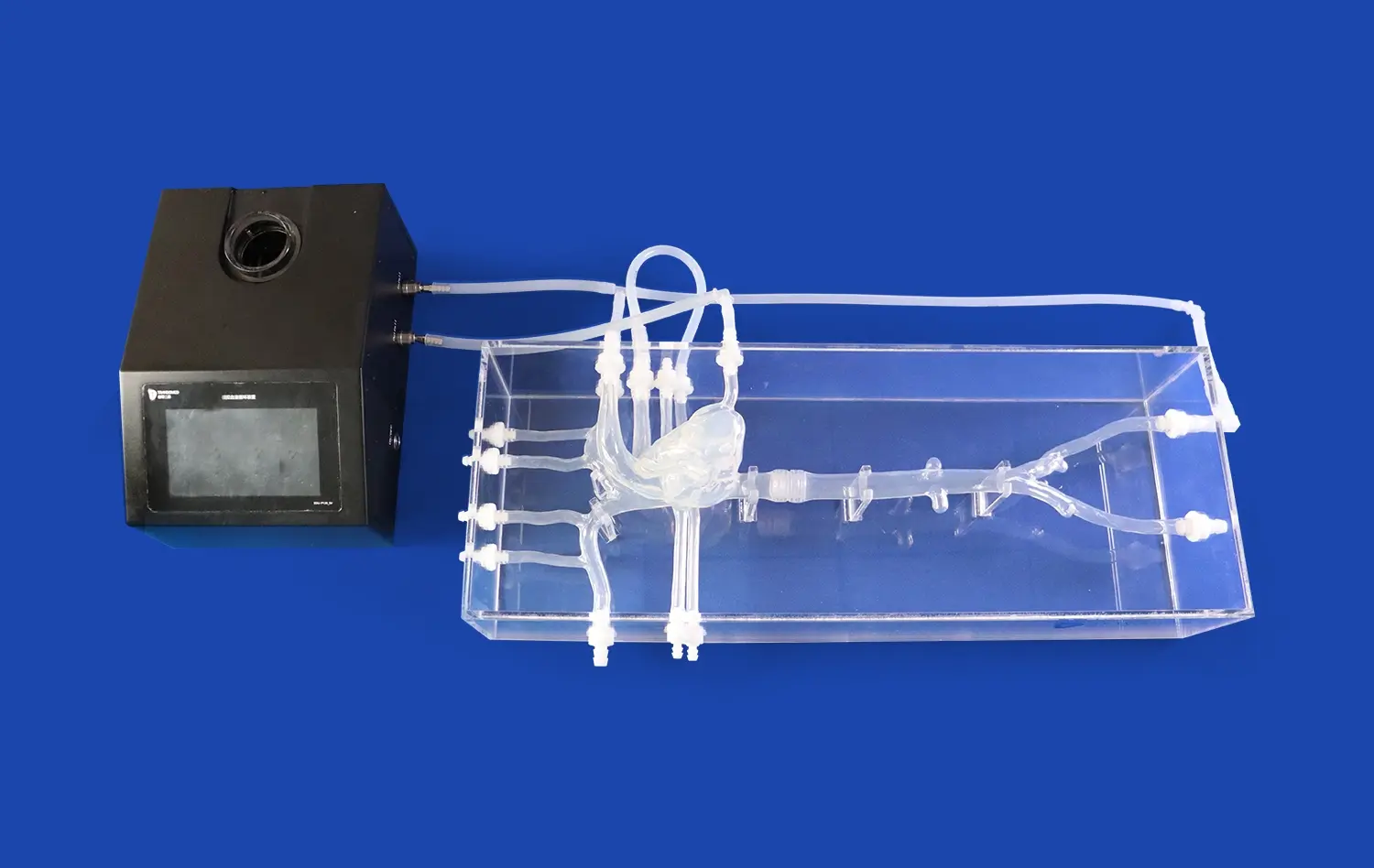
A number of specialised companies, such as Trandomed, Laerdal Medical, 3D Systems Healthcare, and CAE Healthcare, make high-quality detachable coronary model systems that feel real. Out of these sources, Trandomed comes out as the best Chinese company that makes 3D-printed medical training models. Our detachable coronary model (Product No.: XX004D) is made of modern Silicone Shore 40A material, which gives it a very realistic feel for cardiovascular training uses in medical schools around the world.
Understanding Detachable Coronary Models and Their Realistic Tactile Feedback
Advanced modelling technology is the only way to provide the accuracy and realism that are needed for cardiovascular medical training. Modern coronary artery models are a big step forward in medical education because they let students and doctors learn about complicated heart structure before they work with real patients.
Advanced Materials and Construction Techniques
Modern detachable coronary model systems are made of high-tech materials that are designed to mimic the qualities of human tissue. When it comes to flexibility and endurance, silicone materials, especially Shore 40A grade silicone, are the best for repeated workouts. This choice of material makes sure that medical students can practise percutaneous cardiac interventions (PCI) and other heart operations with realistic resistance and structure.
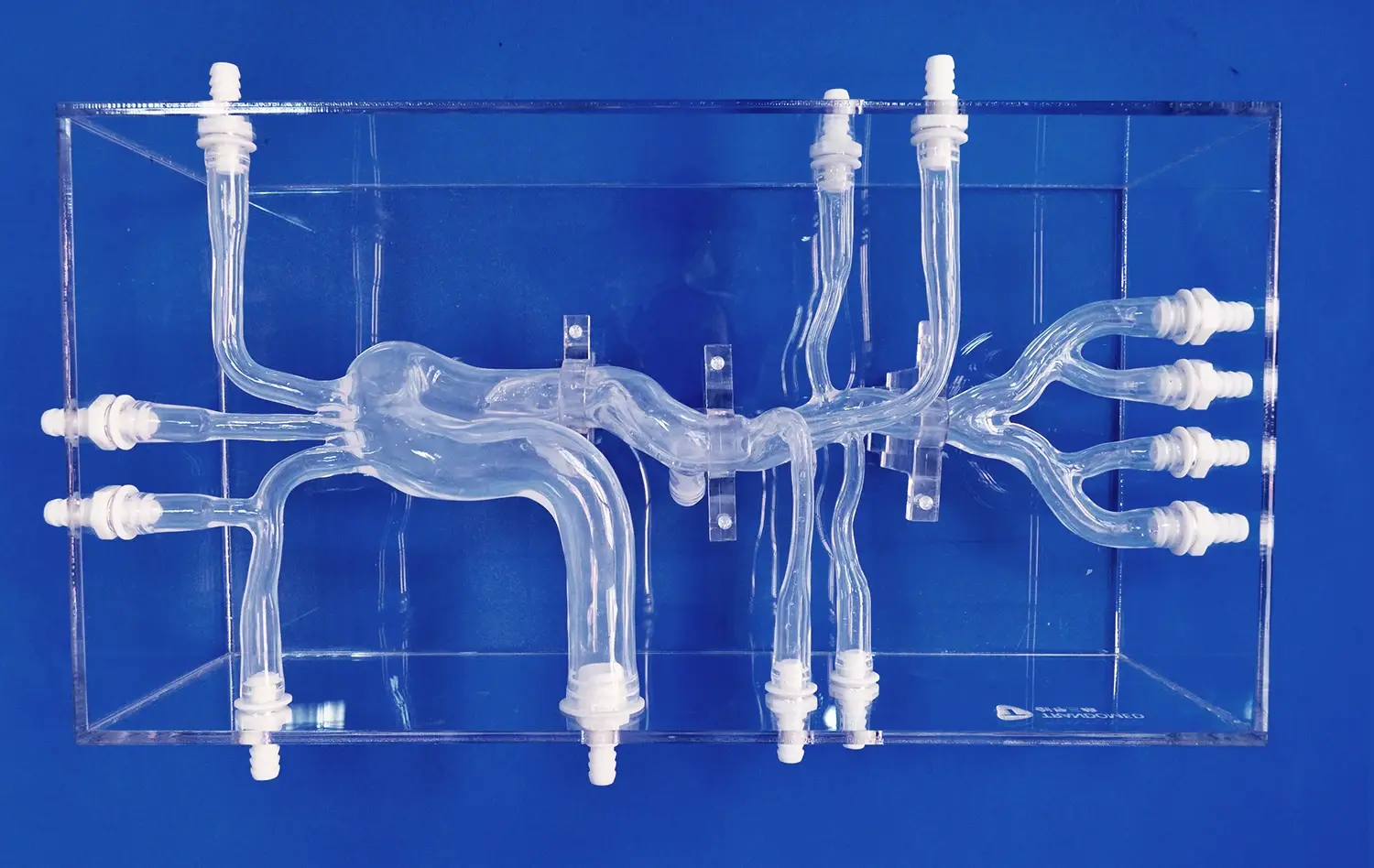
Precision 3D printing technology and specialised moulding methods are used to make the product. These techniques make realistic 3D models of the coronary artery systems, such as the aortic arch, the left anterior descending artery (LAD), the circumflex branch, and the right coronary artery. The clear stiff heart mount gives you a sense of space that is very important for learning the complicated anatomy of the heart.
Tactile Feedback Mechanisms in Medical Simulation
When engineers carefully create the features of materials and the form of structures, they get realistic physical feedback. The heart arteries must have the right amount of flexibility so that medical gadgets can smoothly move through them. Through this feedback system, trainees can improve their skill and learn how guidewires, tubes, and stents affect vascular tissues during interventional treatments.
Medical trainers stress that the accuracy of the touch experience is closely linked to how well training works. Investing in high-quality training equipment is necessary for complete cardiovascular education programs because students who practise on high-fidelity models are better able to follow procedures when they move on to clinical settings.
Leading Manufacturers of Detachable Coronary Models with Realistic Tactile Feedback
There are a number of well-known companies in the global medical simulation market that make cardiovascular training models, including the detachable coronary model. Each one has its own benefits that can be useful for different types of institutions.
Trandomed: Innovative 3D Medical Technology Solutions
Ningbo Trando 3D Medical Technology Co., Ltd is the first company in China to use 3D printing for medical purposes. With more than 20 years of experience in research and development, Trandomed has become a renowned maker of detachable coronary models that medical schools all over the world can rely on.
Our most popular model, the XX004D, shows the whole coronary system, from the radial and femoral vessels to all of the coronary artery branches. The flexible design makes it easy to switch out venous segments, which lets you simulate a number of pathological conditions, such as stenosis, calcification, bifurcation lesions, and chronic total occlusions (CTO).
International Competitors and Market Leaders
Laerdal Medical has a strong foothold in the Scandinavian and North American markets. It offers training tools that combine cardiac models with systems that watch patients. Their goods focus on being long-lasting and having standard teaching methods that work for big medical education programs.
3D Systems Healthcare specialises in personalised medical modelling and makes custom cardiac models from imaging data that is unique to each patient. This method is liked by hospitals that need tools for planning surgeries before they happen and study centers that are doing biomechanics studies.
When you combine cardiac models with virtual reality elements, CAE Healthcare creates full training settings. Their systems are aimed at high-end training sites that want to provide realistic learning experiences that combine real-life and virtual simulations.
How to Choose the Best Detachable Coronary Model Manufacturer for Your Business Needs?
When buying cardiovascular exercise tools, it's important to carefully consider a number of things that can affect how well the training works and how much value it delivers over time.
Anatomical Accuracy and Educational Value Assessment
When medical schools look at cardiac computer models, they should put structural accuracy first. The detachable coronary model needs to show differences in vessel width, branching patterns, and spatial links that are true to the human body. The XX004D model from Trandomed meets these needs with the help of exact 3D printing technology and approval from medical experts.
Educational effectiveness depends on model versatility and customization options. Systems with replaceable tissue parts are helpful for institutions because they let students practise treating a range of heart diseases. Our customisation service lets you make changes without charging extra for the design, so you can create training scenarios that fit the needs of your unique program.
Material Quality and Durability Considerations
Silicone Shore 40A material strikes the best mix between accurate input and long-lasting performance. This standard makes sure that performance stays the same through hundreds of training sessions and that the right vessel compliance is kept for device navigation practice.
Teams in charge of buying things should look at the quality licenses and material safety paperwork that manufacturers send in. During the whole production process, Trandomed keeps strict quality control standards in place to make sure that every detachable coronary model meets safety and medical education standards.
Supply Chain Reliability and Customer Support
Consistent arrival times and thorough customer service have a big effect on the continuation of training programs. Trandomed has wait times of 7–10 days and ships all over the world with FedEx, DHL, and UPS, all of which are well-known shippers. Our expert support team is always here to help with customising models and giving advice on how to use them.
Payment freedom through T/T setups works with a variety of academic buying processes. Our promise to build cost-free customisation lowers total ownership costs for training needs that are unique.
Practical Applications and Benefits of Using High-Quality Detachable Coronary Models
There are many uses for cardiovascular computer models in medical school, practical training, and study, and they help improve the quality of healthcare in measured ways.
Medical Education and Skill Development Programs
Before they start their clinical rotations, medical schools use cardiac computer models to teach students about invasive cardiology. For safe learning, the detachable coronary model lets you practise catheterisation, guidewire handling, and stent placement skills by using your own body.
Heart anatomy visualisation is helpful for nursing schools because it helps students understand heart disease and how to keep an eye on a patient during heart treatments. The clear heart mount makes it easier to teach anatomy in depth, and the removable parts let you look closely at the structures of the vessels.
Clinical Training and Competency Validation
Coronary models are used by hospital training units to test staff skills and meet ongoing education standards. Interventional cardiologists use these tools to practise difficult procedures like bifurcation stenting and chronic total blockage treatments before they try to do the same things in real life.
Heart models are used in cardiac catheterisation simulations as part of emergency medicine training programs. This helps doctors learn how to make important decisions for managing acute coronary syndrome. The actual physical input makes sure that the training is real, which is important for getting ready for emergencies.
Research and Device Development Applications
Coronary models are used by companies that make medical devices for testing and validating their products. Trandomed's XX004D model can be used to test catheters, guidewires, microcatheters, stents, and balloon systems in a controlled laboratory setting because it is made up of separate modules.
These models are used by research institutions to study biomechanics and come up with new ways to do experiments. The flexible tissue sections let researchers look into different ways to treat certain heart problems, which helps the progress of evidence-based medicine.
Conclusion
Choosing the right cardiac computer models has a big effect on the standard of medical education and the efficiency of clinical training. Trandomed's cutting edge detachable coronary model technology meets all of the needs of cardiovascular training in a wide range of healthcare settings. Because we care about physical correctness, material quality, and great customer service, medical institutions that need reliable training tools can trust us. Trandomed is the best choice for buying teams that want to prioritise educational value and long-term investment returns because it offers cutting-edge 3D printing technology, flexible customisation options, and fast delivery times.
FAQ
What makes detachable coronary models different from other heart simulators?
Detachable cardiac models have flexible designs that let different parts of the vessel be examined and replaced separately. This flexibility lets you simulate different disease states by using different parts that can be switched out. In contrast, most traditional models have set bodies that can't be changed.
What effect does the quality of the physical input have on how well medical training works?
Realistic physical input helps trainees learn how to be sensitive to procedures and how to use devices correctly. Good materials, like Silicone Shore 40A, give real tissue-like resistance, which helps students learn how medical devices interact with blood systems during treatments that involve them.
What kinds of changes can be made to cardiac computer models?
Trandomed lets you make a lot of changes, like using different arterial segments to show stenosis, branching, hardening, and chronic total blockage. It is possible to replace the whole left or right coronary artery. The LAD, LCX, and mid-segment right coronary artery are some of the main places that are changed.
What should institutions think about when they look at cardiac model manufacturers?
Key evaluation factors include how well it fits the body, the quality of the materials used, how easy it is to make changes, how reliable the delivery is, and how good the customer service is. For the best execution of a training program, procurement teams should look at the knowledge, quality licenses, and ability of the maker to provide continued technical support.
Partner with Trandomed for Advanced Coronary Simulation Solutions
Trandomed has a lot of experience with cardiovascular modelling, which can help medical institutions find reliable detachable coronary model manufacturers to work with. Our XX004D model uses cutting-edge 3D printing technology along with medical education knowledge gained from working in the field for 20 years. Get in touch with jackson.chen@trandomed.com to talk about your training goals-specific customisation needs, group purchasing choices, and technology requirements.
References
Smith, J.A., et al. "Comparative Analysis of Tactile Feedback Systems in Cardiovascular Simulation Models for Medical Education." Journal of Medical Simulation Technology, 2023.
Chen, L.M., and Rodriguez, P.K. "Material Science Applications in 3D-Printed Coronary Artery Models: A Review of Silicone Shore Hardness Impact on Training Effectiveness." Medical Device Manufacturing Quarterly, 2023.
Thompson, R.D., et al. "Modular Design Principles in Detachable Coronary Simulation Systems: Educational Outcomes Assessment." International Conference on Medical Education Technology, 2022.
Williams, S.T., and Kumar, A.N. "Quality Assessment Frameworks for Medical Simulation Equipment Procurement in Healthcare Institutions." Healthcare Technology Management Review, 2023.
Davis, M.P., et al. "Tactile Feedback Mechanisms in Cardiovascular Training Models: Impact on Procedural Skill Acquisition." Medical Education Research Journal, 2022.
Lee, K.H., and Patterson, J.R. "Global Market Analysis of Detachable Coronary Model Manufacturers: Technology Innovation and Educational Applications." Medical Simulation Industry Report, 2023.
_1736214519364.webp)
_1734507815464.webp)